
Website development
Marketing sites, corporate sites, portals and customer areas. Search visibility, performance, accessibility and an admin interface your own team can use.
We advise company leadership on their artificial intelligence choices — what holds up, what it costs, what it returns — then build the systems that follow. From the public-facing site to the system that drives operations, we also cover the whole range of software a company runs on. Every engagement starts the same way: understand the real process before drawing the tool, and say what will be expensive before committing to it.
We frame use cases, build first versions and industrialize complete AI systems: LLMs, RAG, machine learning, computer vision, IoT, architecture and infrastructure. The point is not to plug in a model; it is to embed AI into your processes, data and teams.
We cover the whole range of software a company runs on, from the public-facing site to the system that drives operations.
Marketing sites, corporate sites, portals and customer areas. Search visibility, performance, accessibility and an admin interface your own team can use.
iOS and Android apps, native or cross-platform. Store releases, notifications, offline mode and synchronisation with your systems.
For when nothing on the market matches how you work. We start from your actual processes instead of asking you to bend them to a package.
Lead and customer tracking, interaction history, follow-ups, quotes, sales dashboards, and connections to your mail and phone systems.
Purchasing, stock, production, cost accounting and reporting in one system — or integrating an existing package with the rest of your tools.
Catalogues, quotes, orders, invoicing, reminders and online payments, with the exports your accounting team expects.
Stock tracking, order picking, routing, fleet geolocation and mobile applications for teams working on site.
Online stores, checkout funnels, payment methods, subscriptions, and links to your ERP or stock management.

LLMs, RAG, machine learning, deep learning, computer vision, IoT and automation with guardrails.
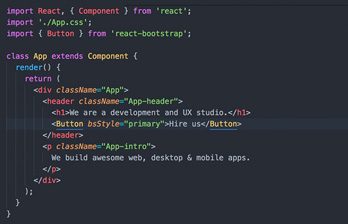
Modern, testable business applications for web, iOS, Android, Windows, Mac and Linux.
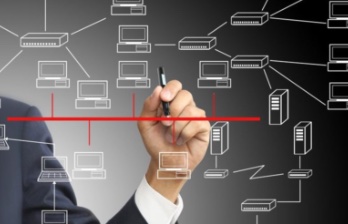
Scalable architectures, optimized schemas and reliable data pipelines.

Hardening, monitoring, incident response and SLAs that keep your platform healthy.

Roadmaps, audits and CTO‑level guidance to de‑risk your programs.
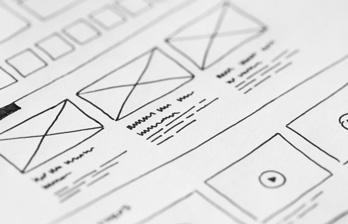
Research‑driven product design that improves usability, accessibility and conversion.
A few lines about the context are enough. We come back with what looks feasible, what looks risky, and a scope we would know how to hold.
It comes down to three things: how many processes it has to cover, which systems it must connect to, and how demanding the availability and compliance requirements are. An internal tool for one team and a system driving a whole supply chain are not the same order of magnitude. We price after a first conversation, and we say what is expensive before committing — including when a requested feature costs more than it returns.
A first usable version usually lands in weeks rather than months: we ship progressively instead of disappearing for a year. Full scope then depends on how many teams are involved and what data has to be migrated. We would rather put a tool covering the essentials into production early, then extend it on real feedback.
Most of the time we start from what you have. A rebuild is sometimes justified, but it is rarely the first instinct to follow: taking over code written by others, stabilising it and moving it forward is a large part of our work. We look at what exists before proposing anything.
We stay. Fixes, changes, monitoring, version upgrades: shipped software is not finished software. The code is documented and yours, so your team or another supplier can take over — that is a starting condition, not a favour.
Not always, and that is often the most useful answer. AI earns its place when a task is repetitive, high-volume and tolerates a bounded error rate: document search, qualification, extraction, assistance. When a clear business rule does the job, a business rule is cheaper and easier to debug. We say so beforehand, not afterwards.
Both, depending on what you need. We can take a project end to end, reinforce an existing team, or frame a subject your own developers will then build. In every case the person who frames the project is the one who writes it: you keep the same point of contact from the first meeting through to maintenance.
RAG assistant, voice agent, document processing, AI audit: six frequent requests, covered in detail.
CRM, ERP, e-commerce, logistics, back-office: the software we build day to day.
The technical domains we draw on, and the business contexts where they matter.
The building blocks we assemble — no imposed stack, the project decides.
Scoping, short cycles, security by design, governance and handover.